
Slime Molds and Cognitive Maps
November 24st, 2026
Oğul Can Yurdakul
Department of Cognitive Science, UC Irvine
Slime Molds and Cognitive Maps
November 24st, 2026
Oğul Can Yurdakul
Department of Cognitive Science, UC Irvine
World of the Slime Mold
The slime itself: Physarum polycephalum
- eukaryote but not a fungus! - amoeboid protist - "syncytium:" one cell, *millions* of nuclei! 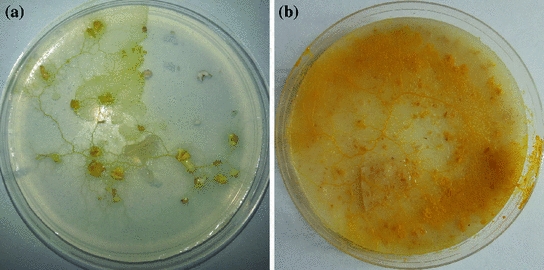 - plasmodium: mobile form - few mm$^2$ to over half a m$^2$ - can move up to 1cm/h - has inspired many work, including an optimization algorithm
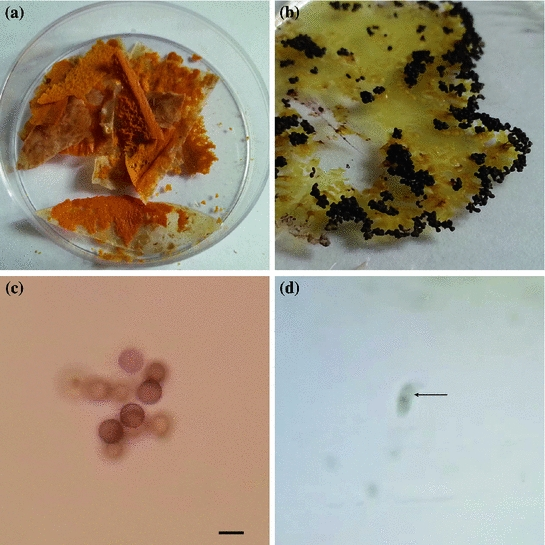 (a) Fragments of sclerotium. (b) Sporangia. (c) Spores. (d) Swarm cell (arrowed). c, d Scale bar = 10$\upmu$m
Mapping the world with/of the slime mold
Slime molds as path finders
- Maze solving $\quad\quad$
Mapping the world with/of the slime mold
Slime molds as path finders
- Maze solving $\quad\quad$
- Tokyo subway map $\quad\quad\quad\quad$
Mapping the world with/of the slime mold - 2
Slime molds as “problem solvers”
- Traveling salesperson problem 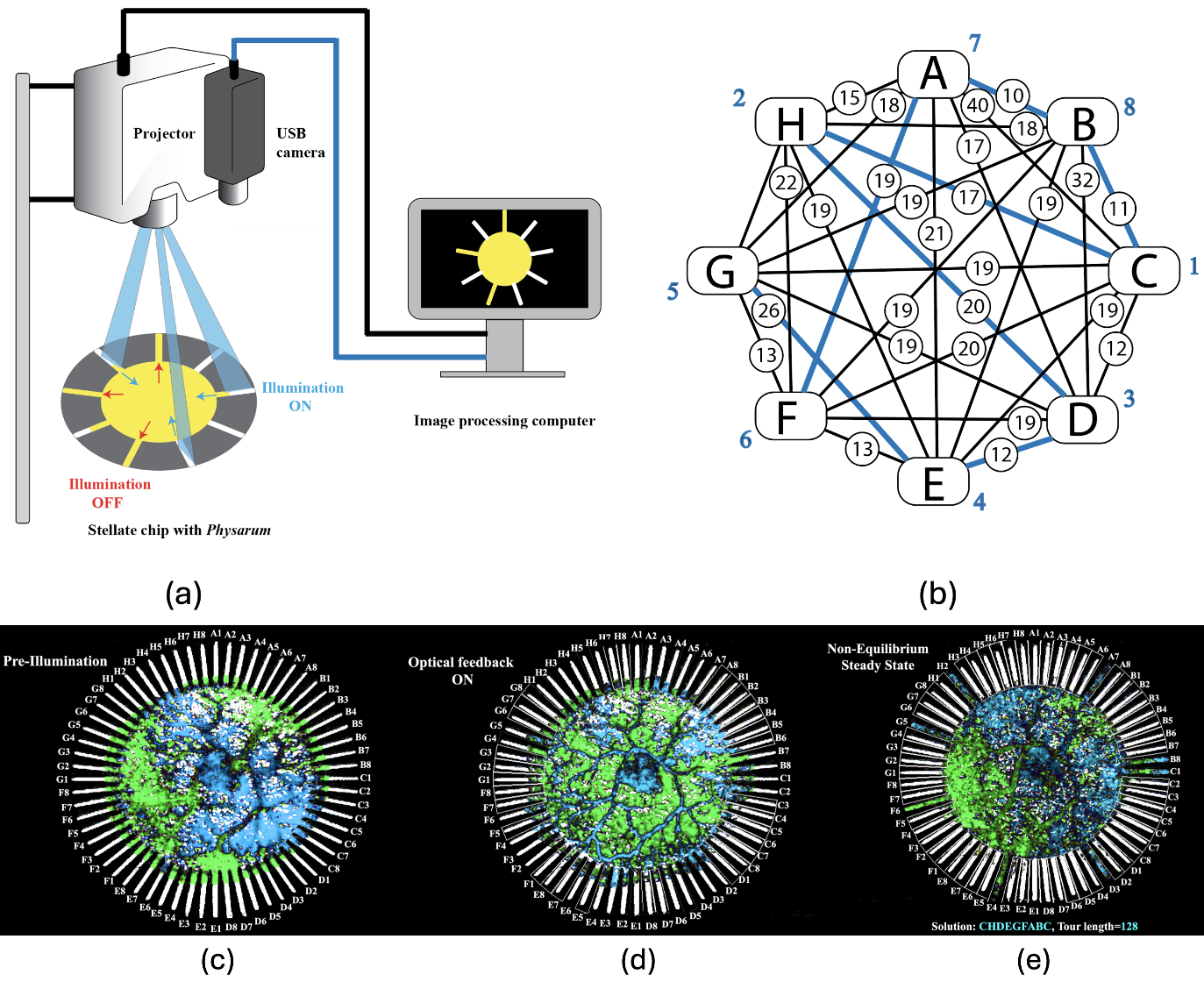
Mapping the world with/of the slime mold - 2
Slime molds as “problem solvers”
- Traveling salesperson problem 
- Towers of Hanoi puzzle 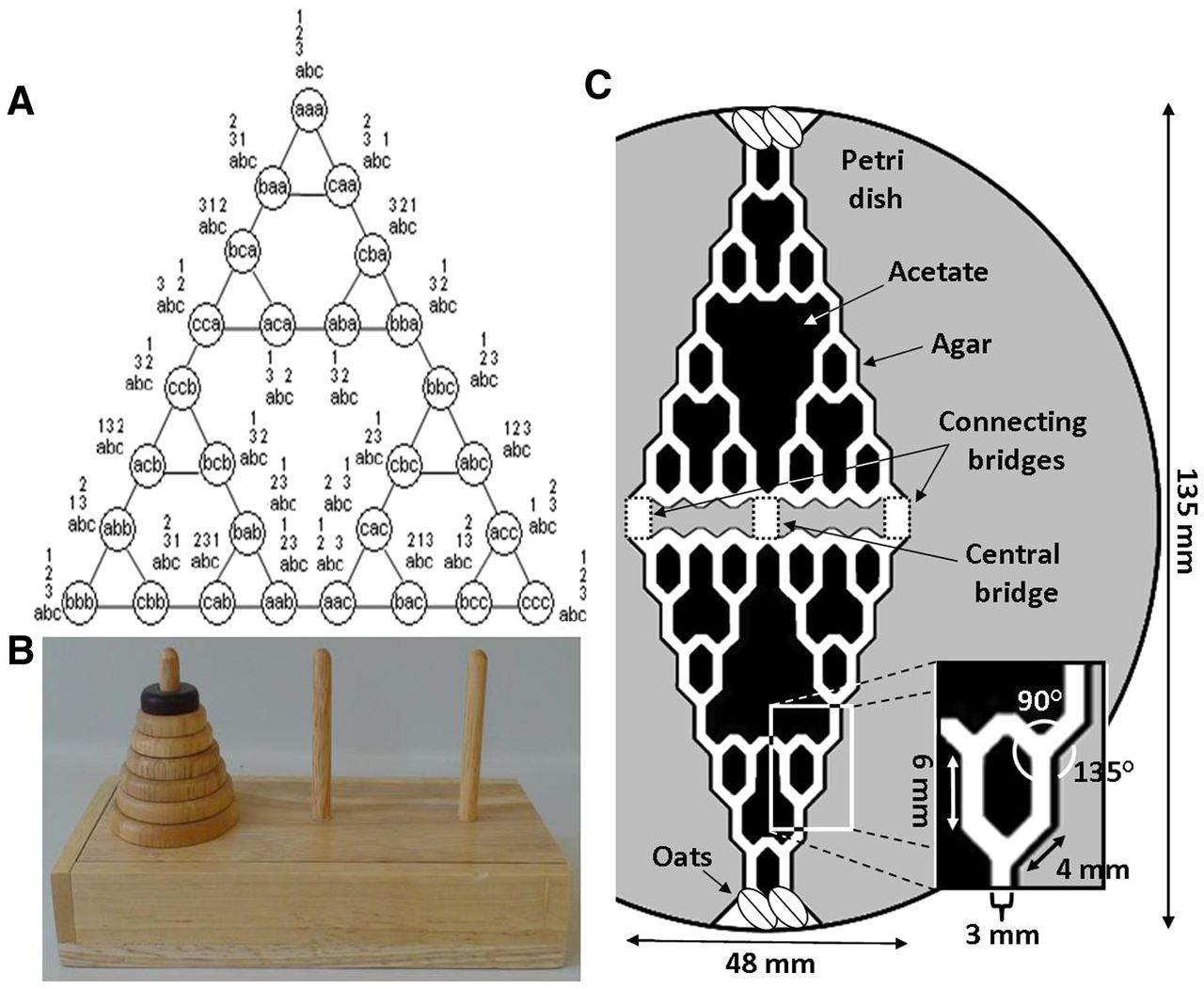 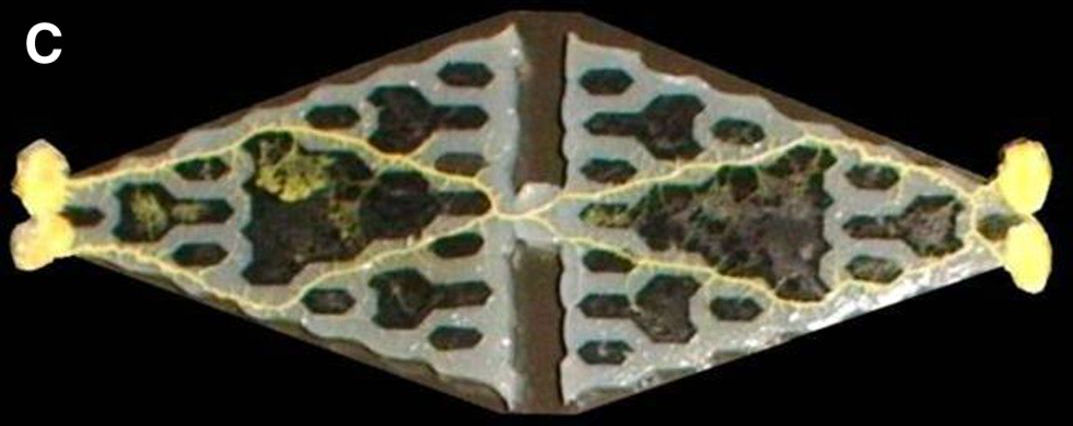
Mapping the world with/of the slime mold - 3
Slime molds as ???
- Urban designers? 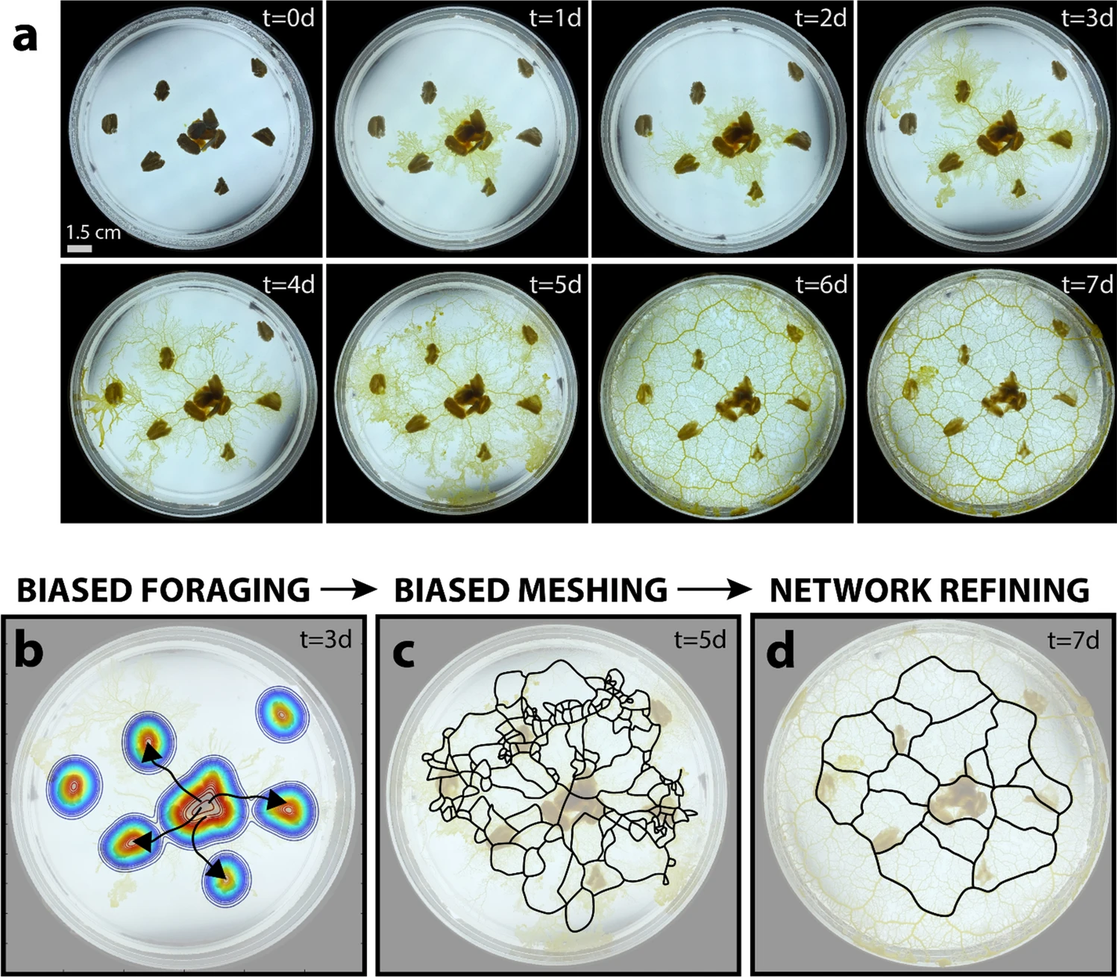
Mapping the world with/of the slime mold - 3
Slime molds as ???
- Urban designers? 
- Romans?? 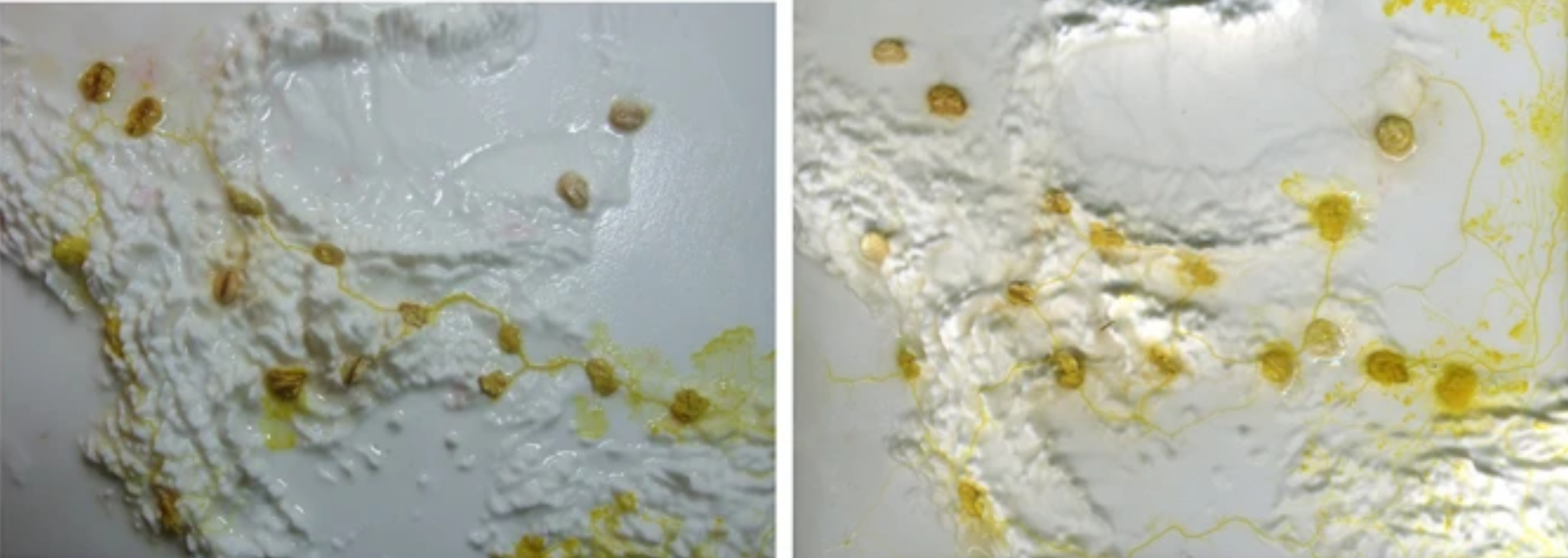
Mapping the world with/of the slime mold - 3
Slime molds as ???
- Urban designers? 
- Romans??  - Colonizers??? 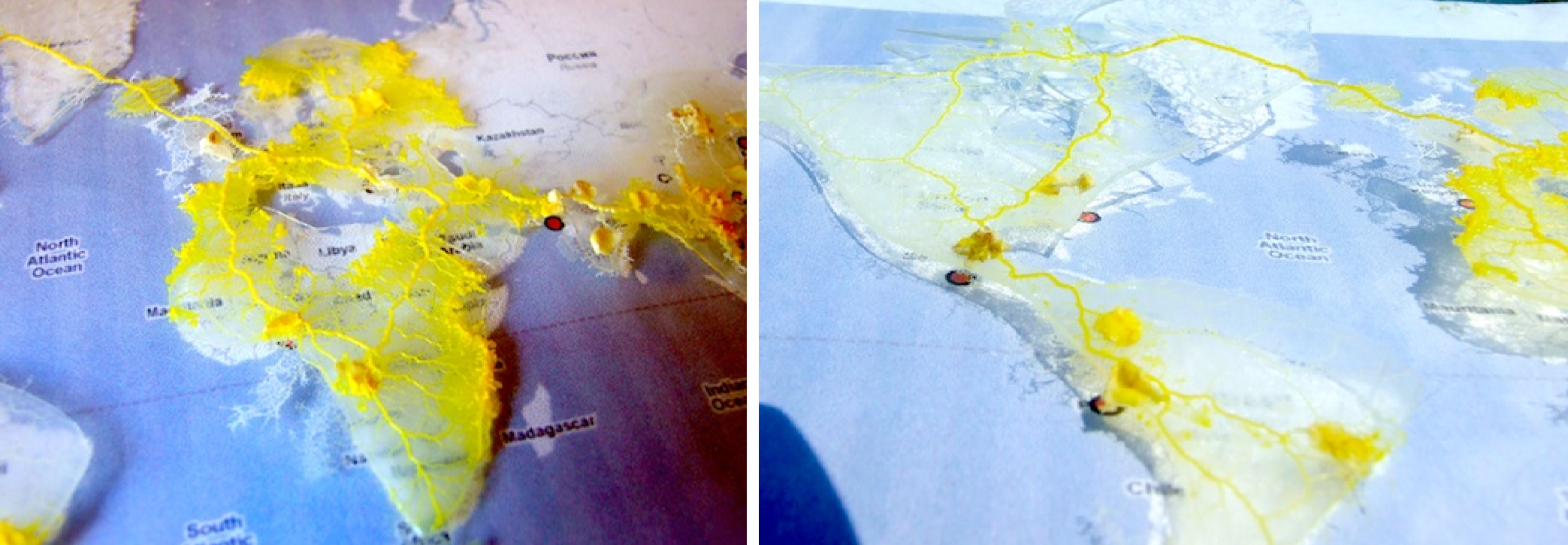
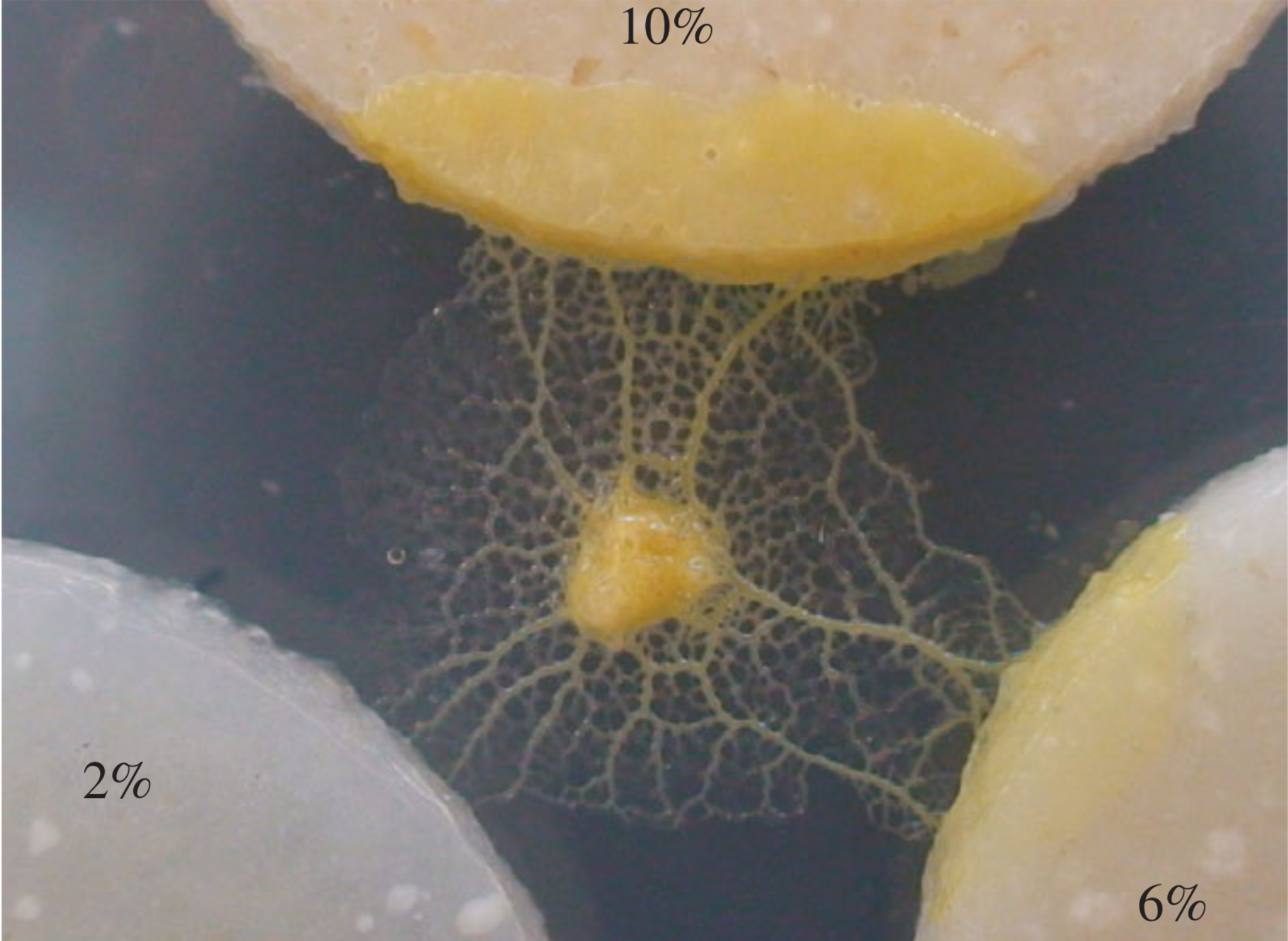
To err is human slime mold
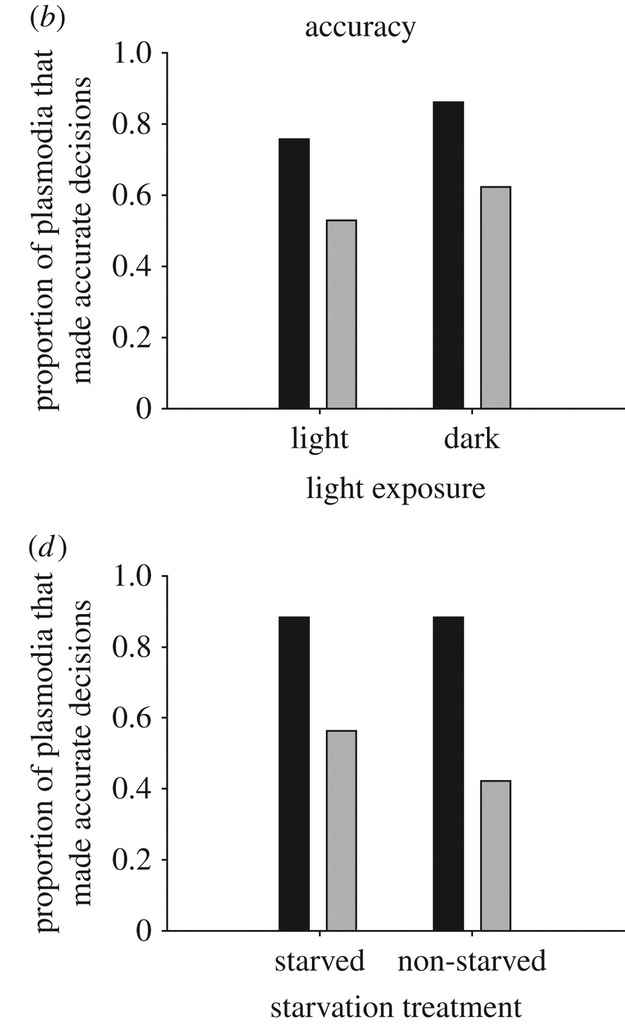
#### Speed-accuracy trade-off when having to choose between food sources, adding stressors reduce accuracy of choosing the larger one
To err is human slime mold
#### Speed-accuracy trade-off when having to choose between food sources, adding stressors reduce accuracy of choosing the larger one
 dark: easy gray: difficult
To err is human slime mold
#### Speed-accuracy trade-off when having to choose between food sources, adding stressors reduce accuracy of choosing the larger one
 dark: easy gray: difficult

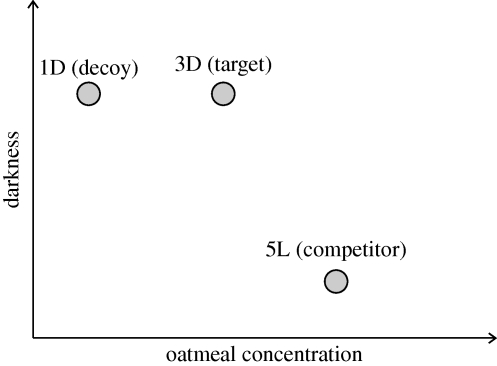
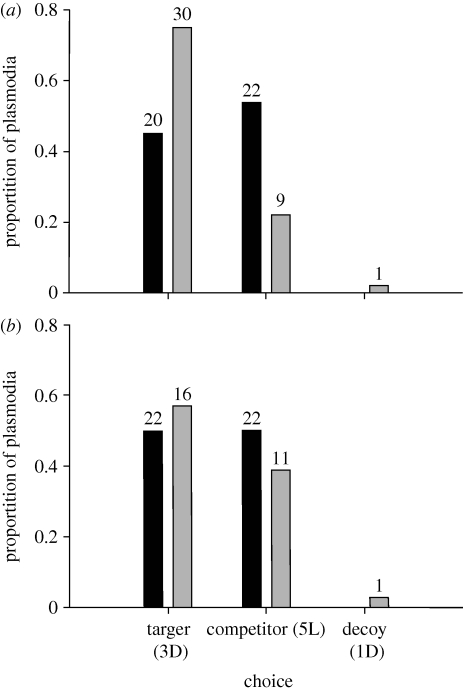
#### Independence of Irrelevant Alternatives when an overall worse option is introduced into a choice among two, slime molds sometimes choose it
To err is human slime mold
#### Speed-accuracy trade-off when having to choose between food sources, adding stressors reduce accuracy of choosing the larger one
 dark: easy gray: difficult

#### Independence of Irrelevant Alternatives when an overall worse option is introduced into a choice among two, slime molds sometimes choose it
 dark: two-choice setup gray: three-choice setup
Computational Models
**Analytically derived** - the slime mold's thickness is assumed to be/approximated by a mathematical rule $$\frac{\partial s}{\partial t} = \nabla\cdot(sM\nabla p)$$ 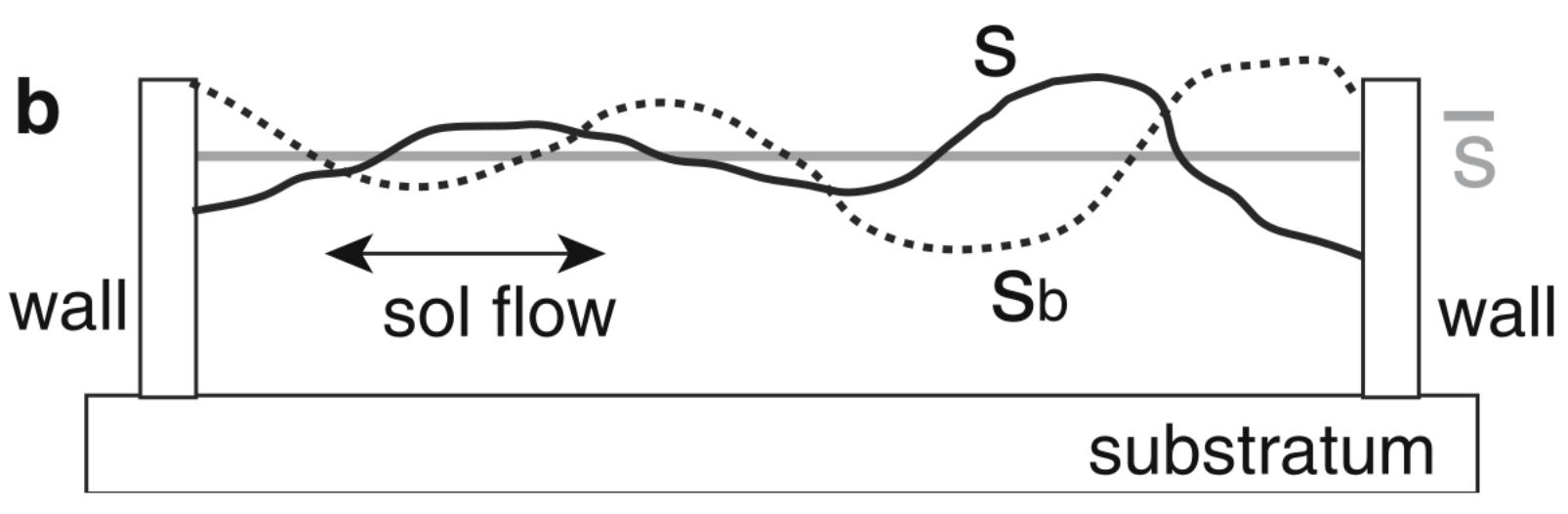
Computational Models
**Analytically derived** - the slime mold's thickness is assumed to be/approximated by a mathematical rule $$\frac{\partial s}{\partial t} = \nabla\cdot(sM\nabla p)$$ 
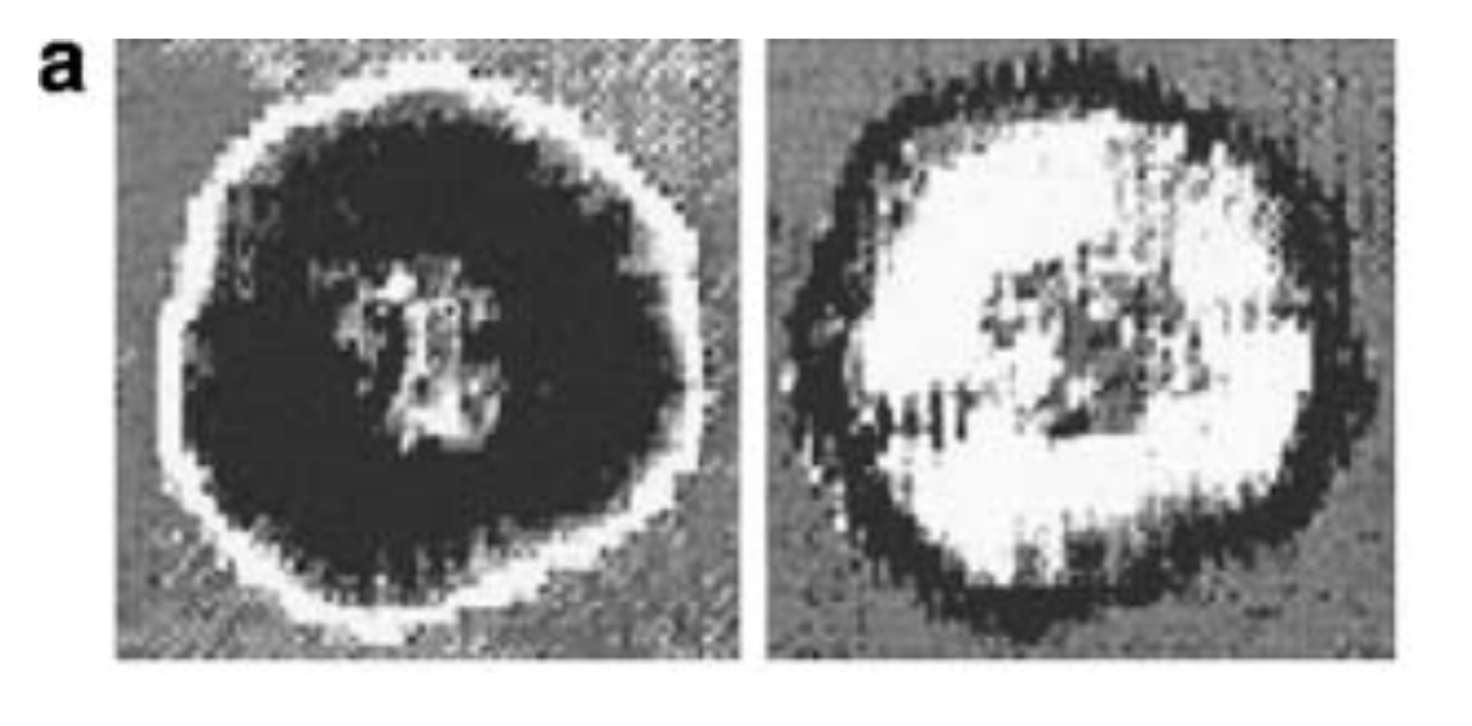 real slime mold patterns
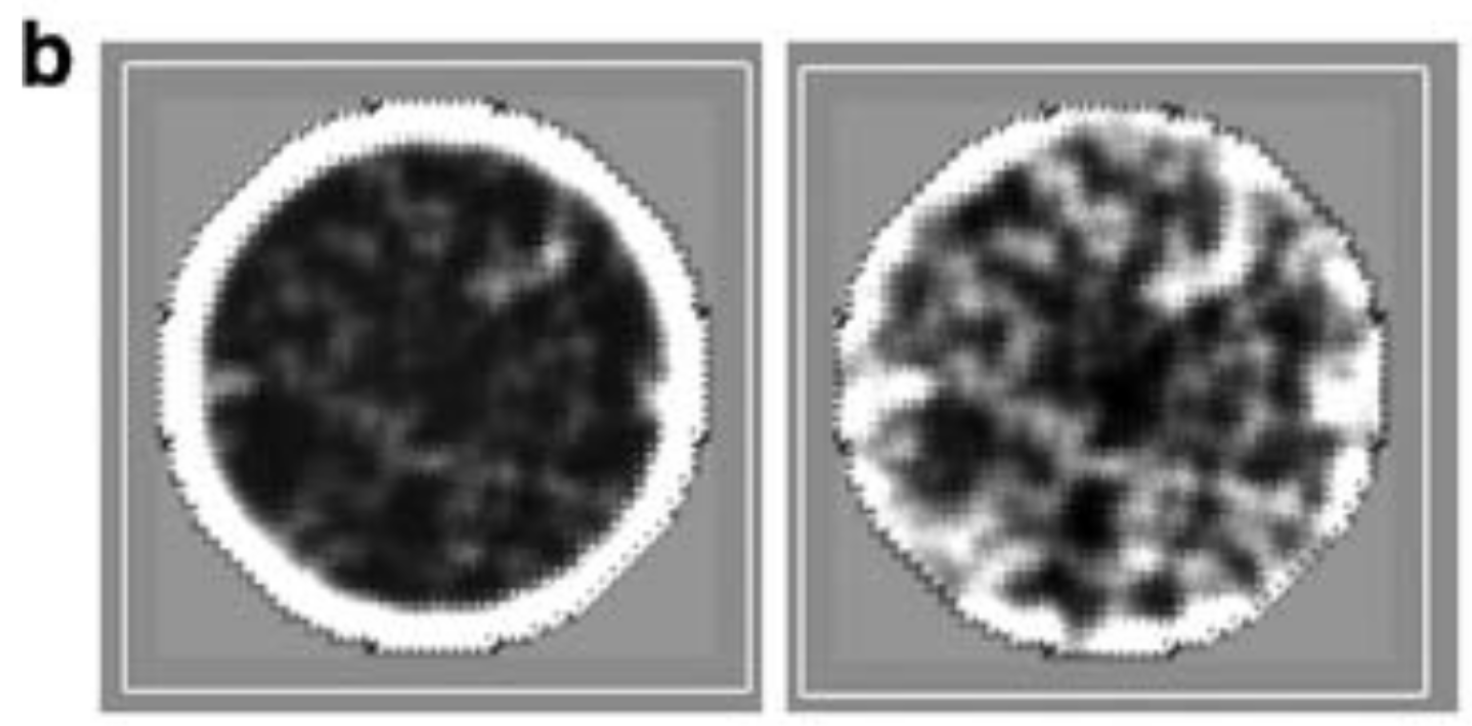 simulation results
Computational Models
**Analytically derived** - the slime mold's thickness is assumed to be/approximated by a mathematical rule $$\frac{\partial s}{\partial t} = \nabla\cdot(sM\nabla p)$$ 
 real slime mold patterns
 simulation results
**Monte Carlo-based** - lots of small particles make small decisions to generate overall behavior 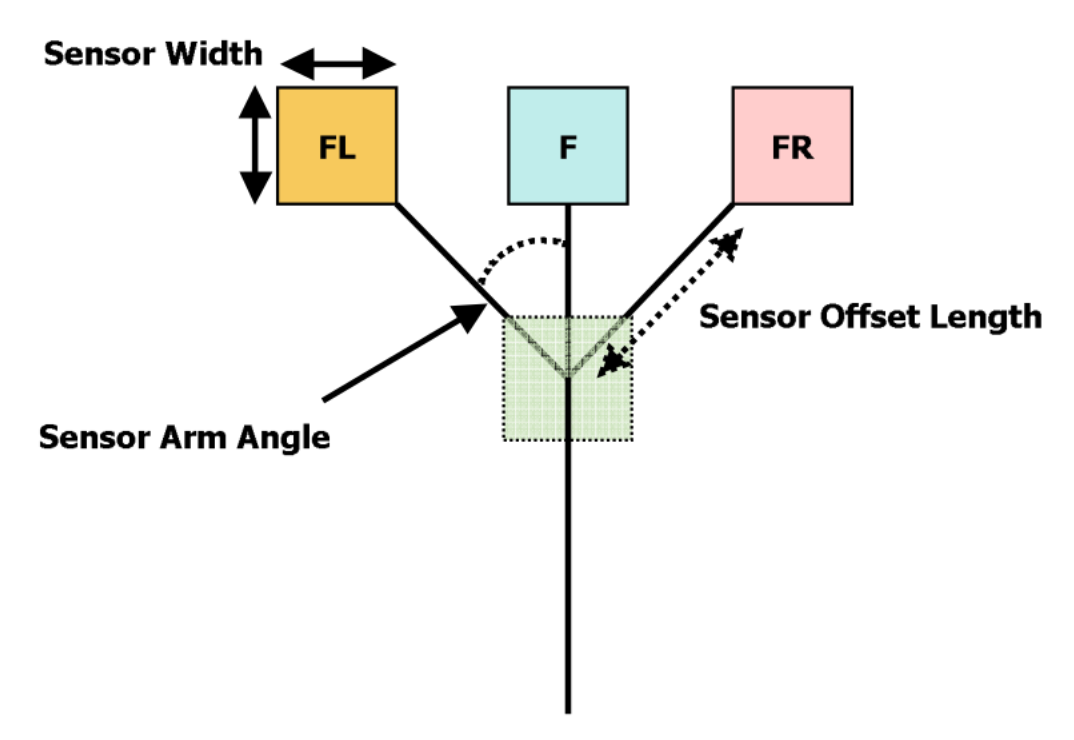
Computational Models
**Analytically derived** - the slime mold's thickness is assumed to be/approximated by a mathematical rule $$\frac{\partial s}{\partial t} = \nabla\cdot(sM\nabla p)$$ 
 real slime mold patterns
 simulation results
**Monte Carlo-based** - lots of small particles make small decisions to generate overall behavior  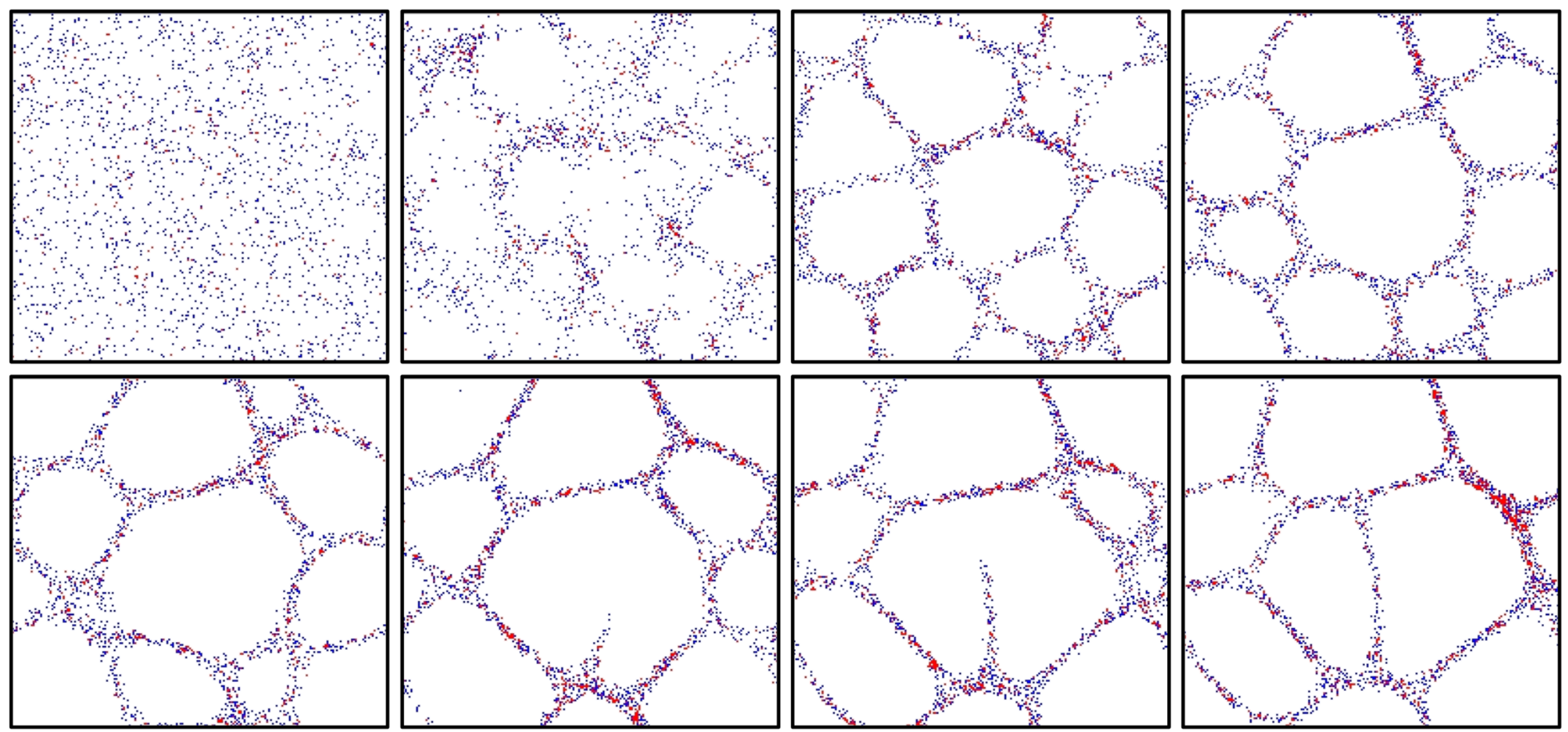
Analyticaly derived models
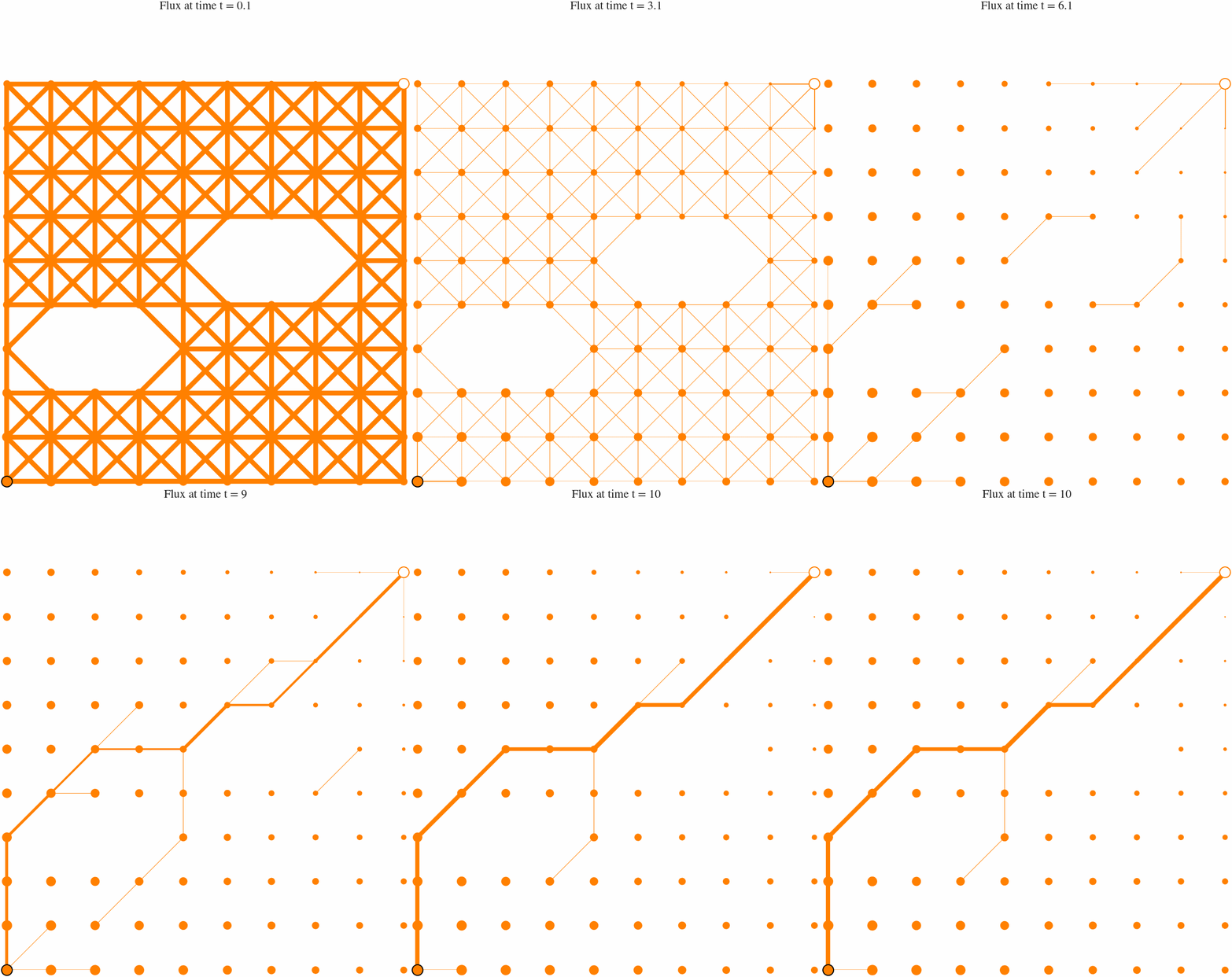
Tero et al (2007) adapted Kobayashi et al. (2006)'s model to graphs - flux $Q_{ij}$ from node $i$ to $j$: $$\qquad Q_{ij} = \dfrac{D_{ij}}{L_{ij}}(p_i - p_j)$$ where $D_{ij}$ is the conductivity of the edge, $p_i$ are pressures at nodes - two nodes are special: one is source, one is sink
flux _conserved_ at regular node $i$ $$\sum_j Q_{ij} = 0$$
flux _generated_ at source node $$\sum_j Q_{\textrm{source},j} = I_0$$
flux _consumed_ at sink node $$\sum_j Q_{\textrm{sink},j} = -I_0$$
Analyticaly derived models
Tero et al (2007) adapted Kobayashi et al. (2006)'s model to graphs - flux $Q_{ij}$ from node $i$ to $j$: $$\qquad Q_{ij} = \dfrac{D_{ij}}{L_{ij}}(p_i - p_j)$$ where $D_{ij}$ is the conductivity of the edge, $p_i$ are pressures at nodes - two nodes are special: one is source, one is sink- adapt the conductivities according to $$\dfrac{d}{dt}D_{ij} = f(|Q_{ij}|) - rD_{ij}$$
flux _conserved_ at regular node $i$ $$\sum_j Q_{ij} = 0$$
flux _generated_ at source node $$\sum_j Q_{\textrm{source},j} = I_0$$
flux _consumed_ at sink node $$\sum_j Q_{\textrm{sink},j} = -I_0$$

Analyticaly derived models
Tero et al (2007) adapted Kobayashi et al. (2006)'s model to graphs - flux $Q_{ij}$ from node $i$ to $j$: $$\qquad Q_{ij} = \dfrac{D_{ij}}{L_{ij}}(p_i - p_j)$$ where $D_{ij}$ is the conductivity of the edge, $p_i$ are pressures at nodes - two nodes are special: one is source, one is sink- adapt the conductivities according to $$\dfrac{d}{dt}D_{ij} = f(|Q_{ij}|) - rD_{ij}$$
flux _conserved_ at regular node $i$ $$\sum_j Q_{ij} = 0$$
flux _generated_ at source node $$\sum_j Q_{\textrm{source},j} = I_0$$
flux _consumed_ at sink node $$\sum_j Q_{\textrm{sink},j} = -I_0$$
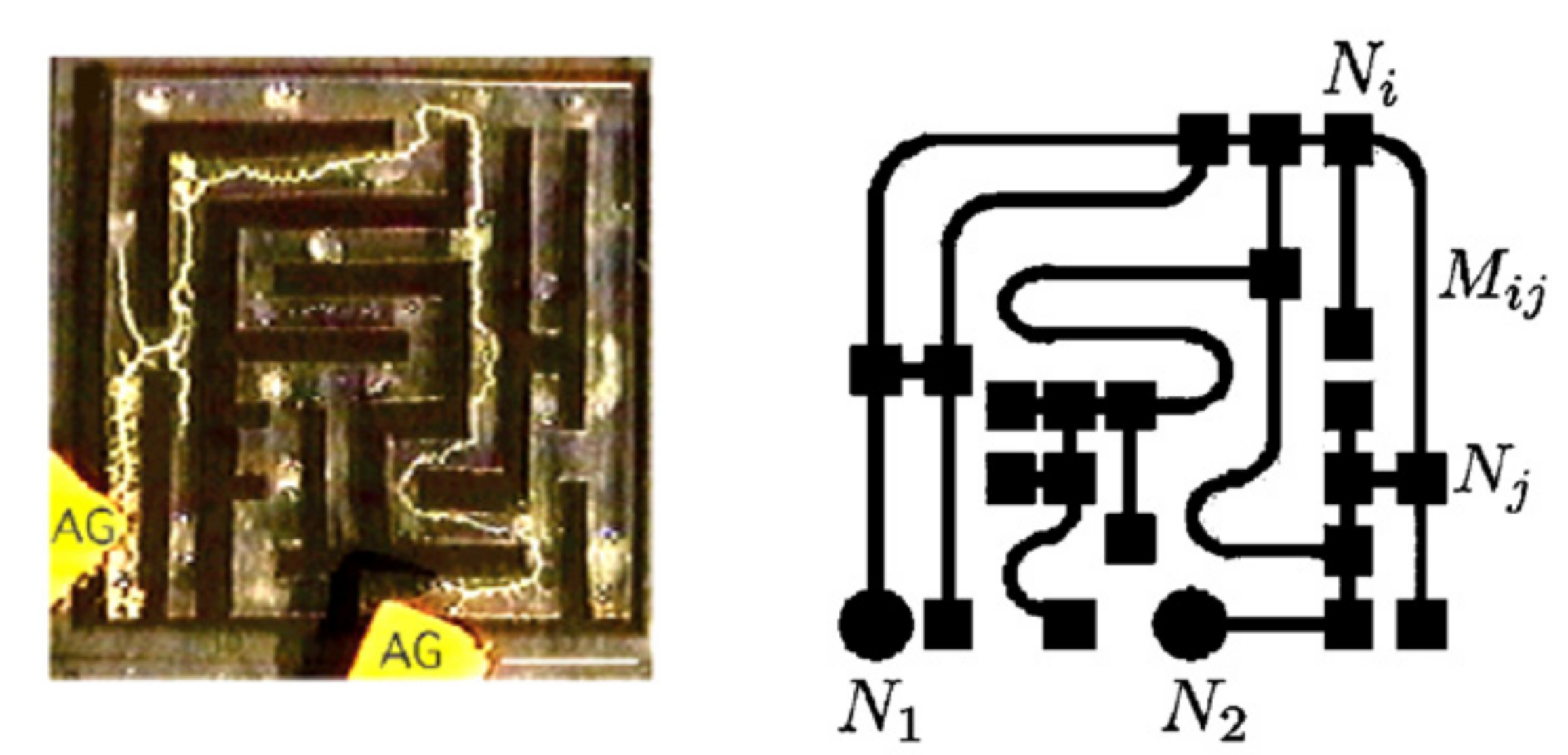
 - **this is just a lumped circuit model!** - $p_i$ is node voltages, - $Q_{ij}$ is the current, - $G_{ij} = \dfrac{D_{ij}}{L_{ij}}$ is the conductance 
Monte Carlo-based models
simple actions of little particles can give rise to complex behavior at the population level…
Jones (2010)'s model: 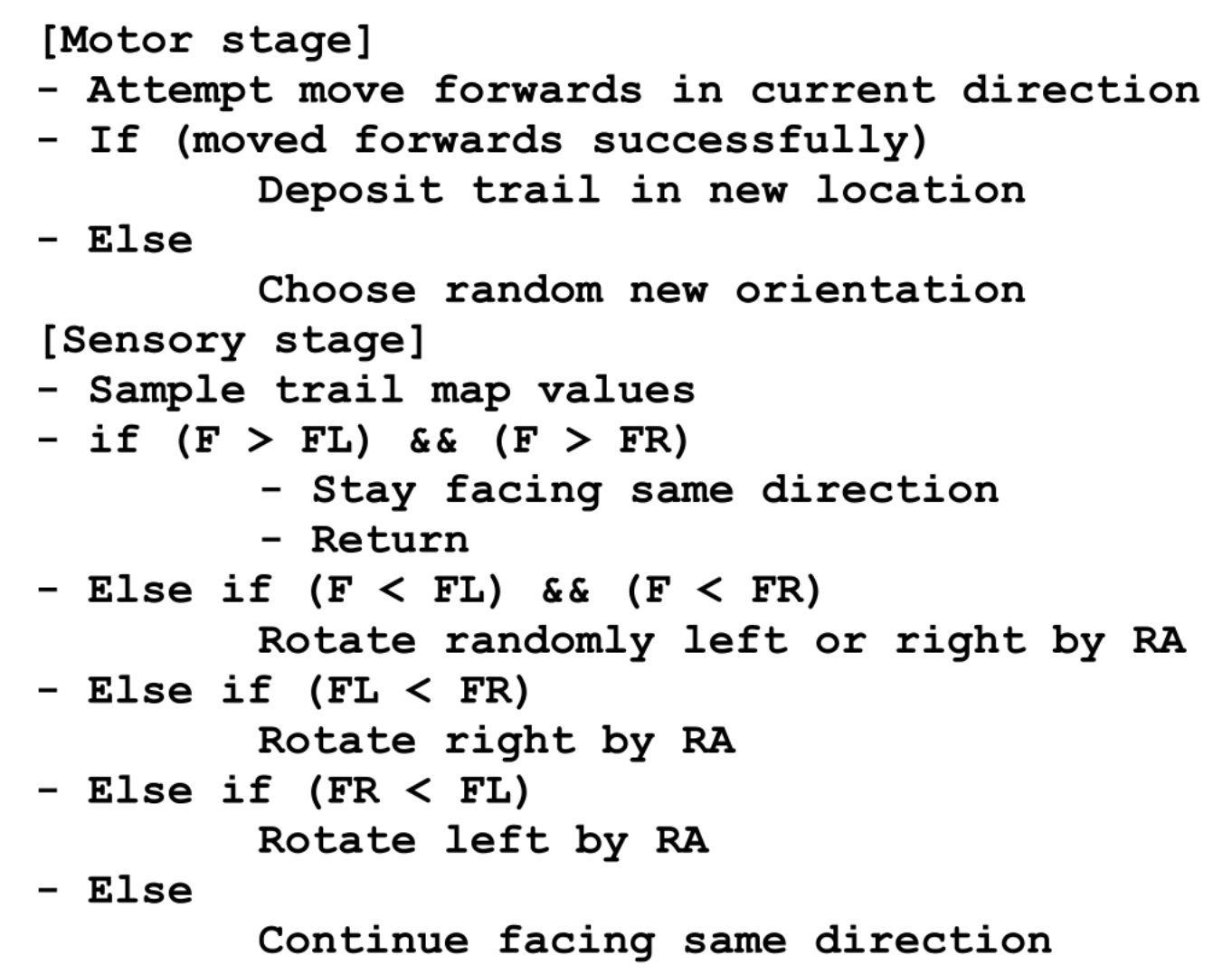 
Monte Carlo-based models
simple actions of little particles can give rise to complex behavior at the population level…
Jones (2010)'s model:  
**can we build on this?** - say each particle "looks" at all the nodes it can travel to and assigns a positive "score" to each of them - softmax decision: - sample the next node proportional to these scores - Metropolis-Hastings decision: - sample a candidate next node - if better, move there - if worse, move or stay probabilistically
Shortcomings of the current models
Tero et al. (2007): 
- biologically undesirable model - the function $f(|Q_{ij}|)$ is not as interpretable - food sources are modeled asymmetrically - no repulsion term: light or slime - no "exploration"
Shortcomings of the current models
Tero et al. (2007): 
- biologically undesirable model - the function $f(|Q_{ij}|)$ is not as interpretable - food sources are modeled asymmetrically - no repulsion term: light or slime - no "exploration"
Jones (2010): 
- no accounting of the path-finding effects - no food, no light, just slime
Results and Outcomes
- a
ratinabox-style toolbox emerges!world = slimeWorld(node_locs, C_, light, slime, opts)slime = circuitSlime(world, options)slime = softmaxSlime(world, options)slime = MHslime(world, options)
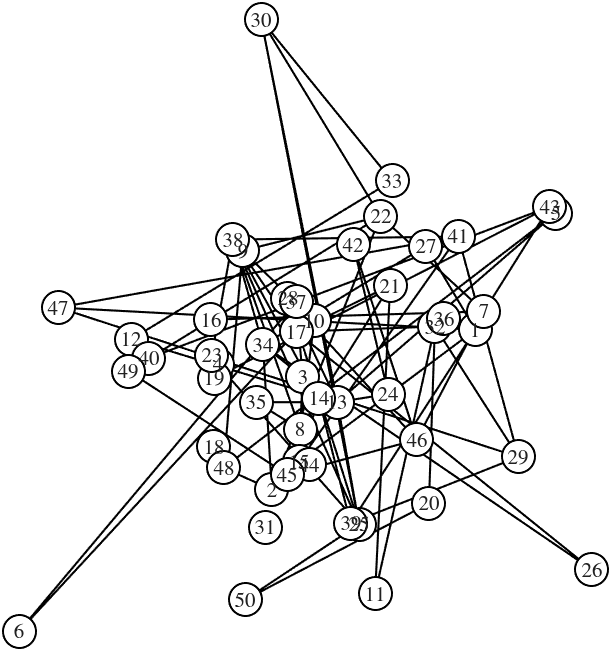
- example:
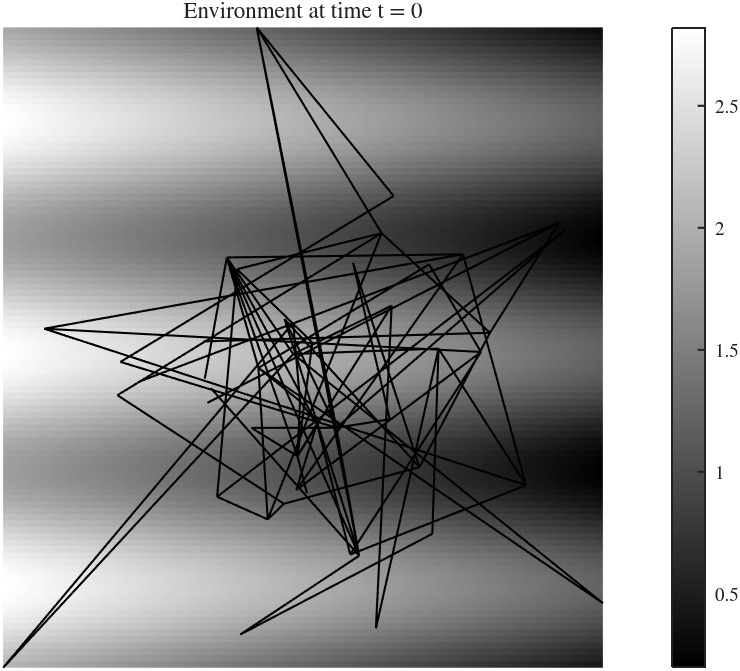
Results and Outcomes
- a
ratinabox-style toolbox emerges!world = slimeWorld(node_locs, C_, light, slime, opts)slime = circuitSlime(world, options)slime = softmaxSlime(world, options)slime = MHslime(world, options)
- example:


Results and Outcomes
Path-finding and detours
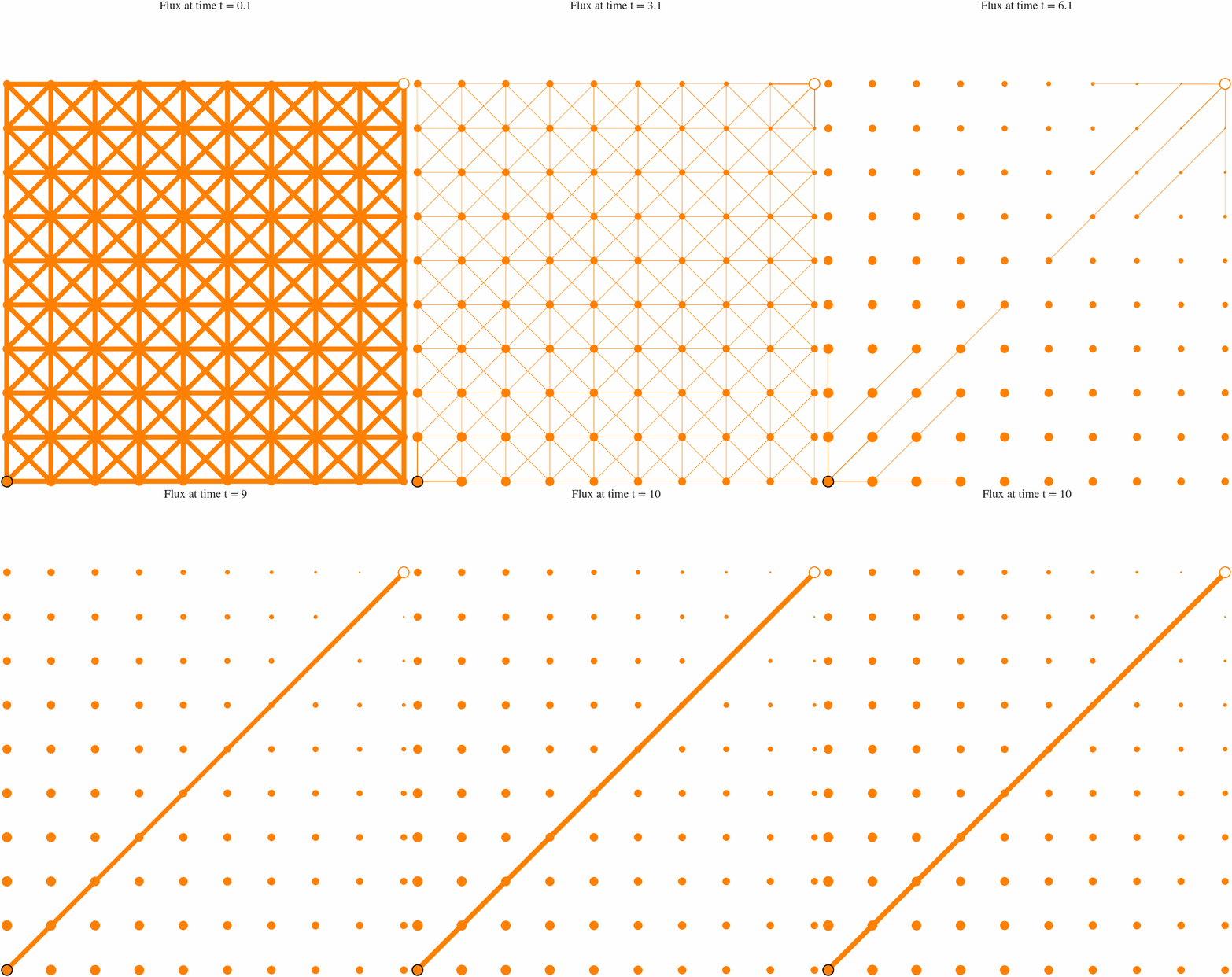
Results and Outcomes
Path-finding and detours

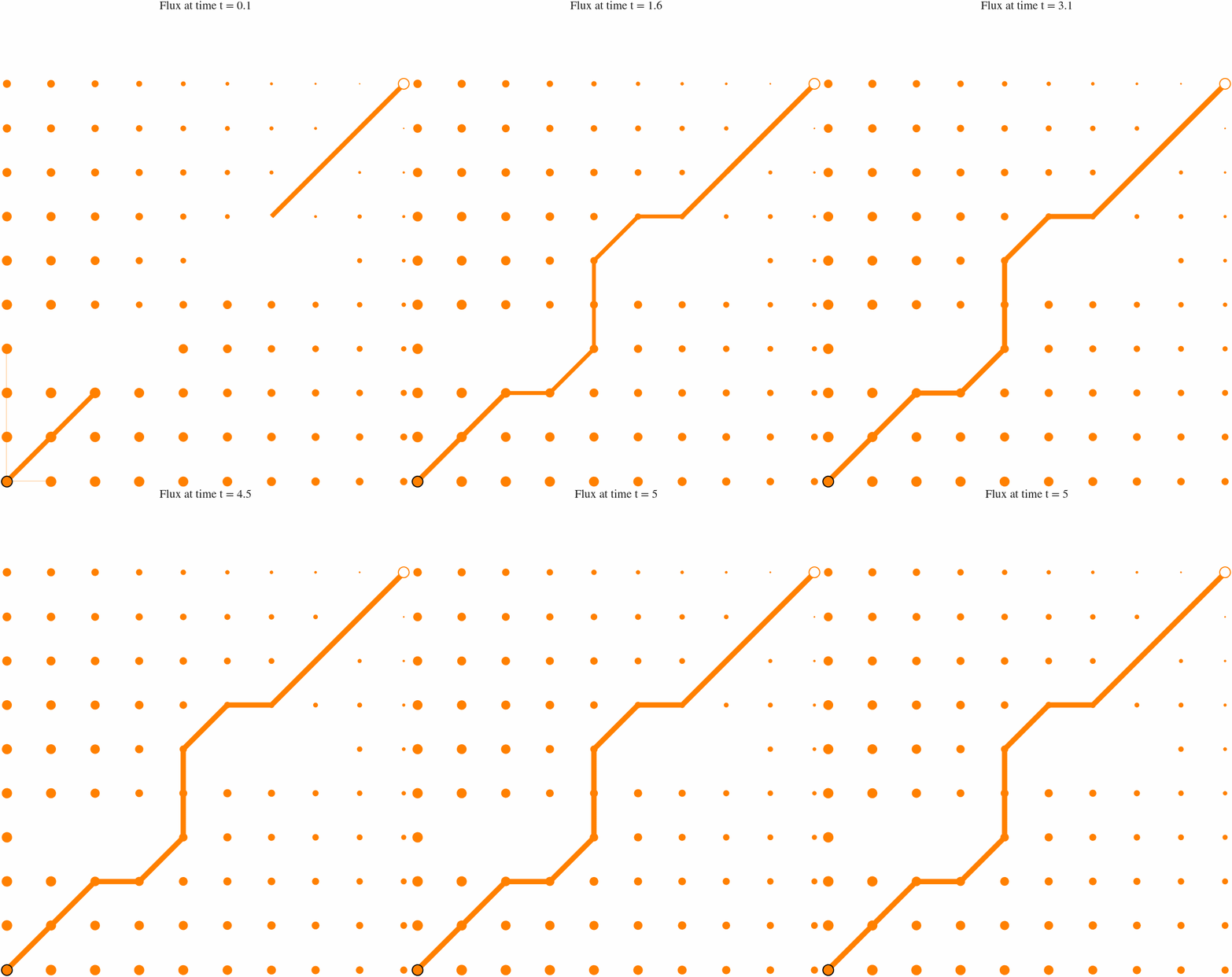
Results and Outcomes
Path memory

Results and Outcomes
Path memory

Results and Outcomes
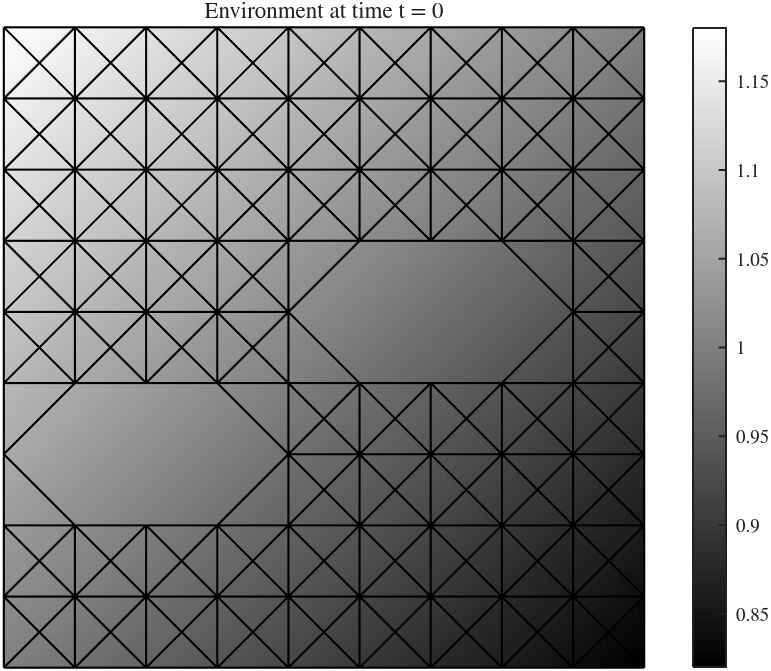
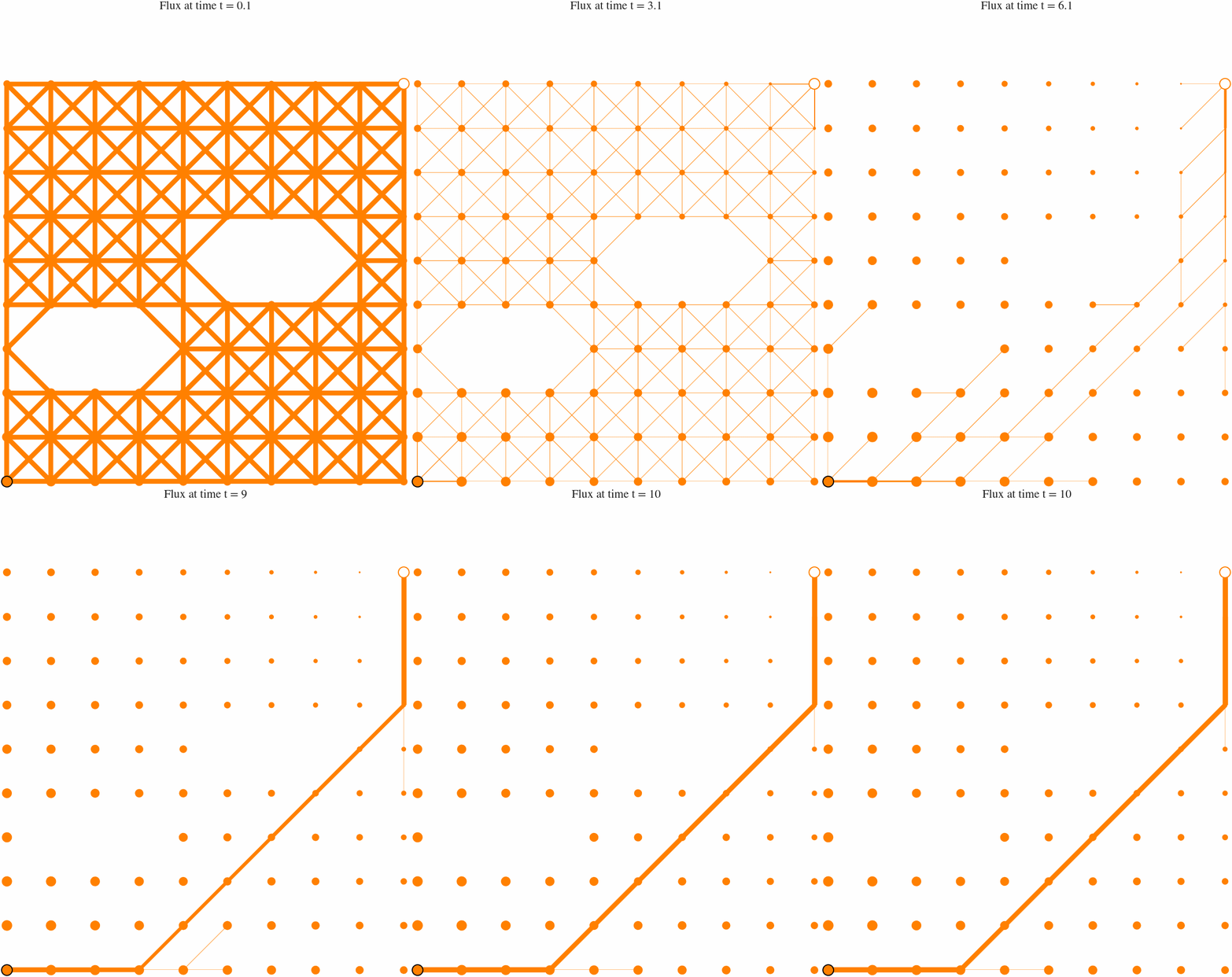
Undesirable paths
Future directions
- Tolman's sun maze: Latent learning in slime molds? 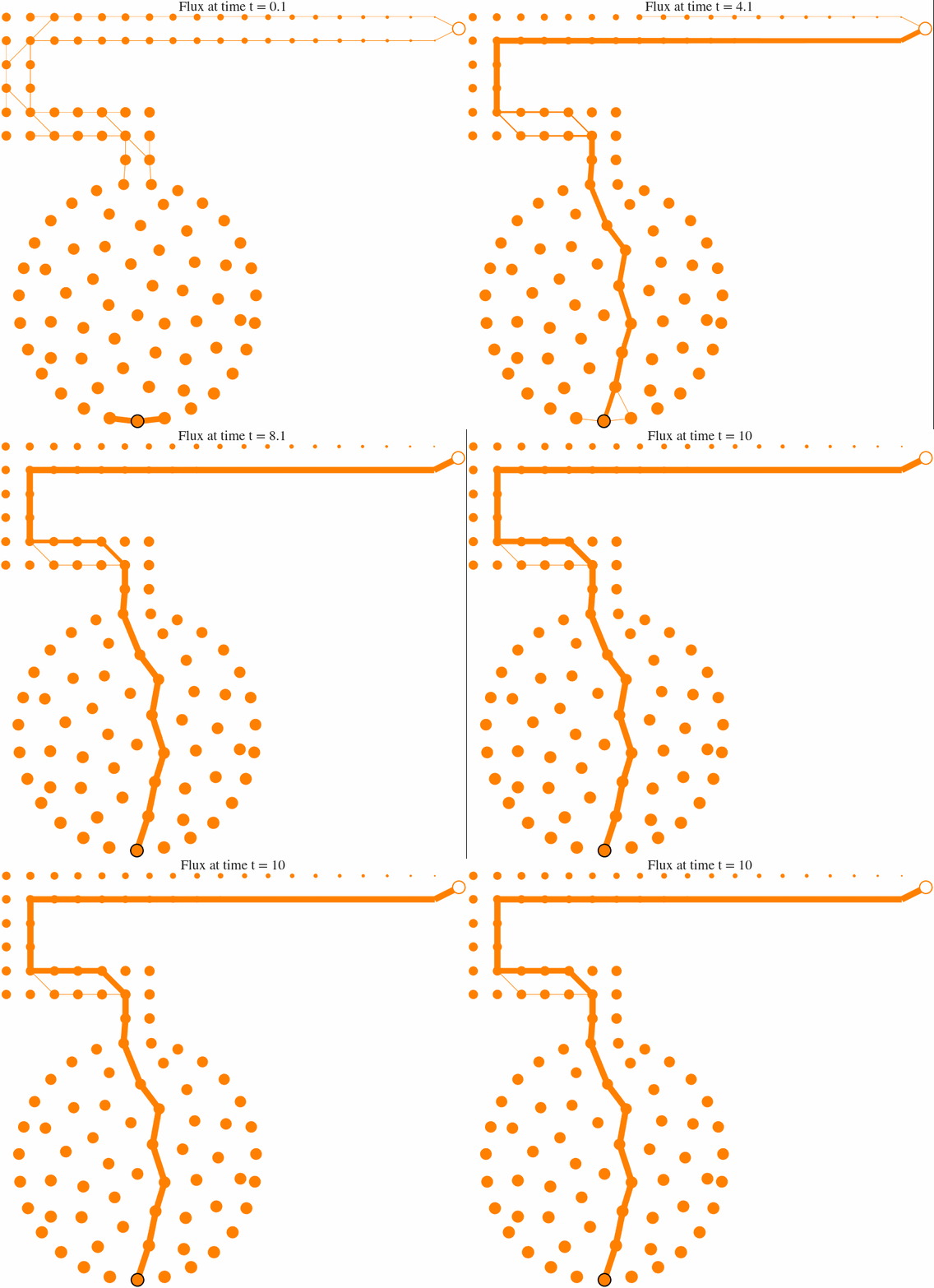
Future directions
- Tolman's sun maze: Latent learning in slime molds?  
Future directions
- Tolman's sun maze: Latent learning in slime molds?  
- Spatial memory - Temporal memory: accommodation to repeated stimuli - Foraging experiments - Memory sharing in slime molds in contact - ...