Slime Molds and Cognitive Maps

November 24st, 2026

Oğul Can Yurdakul

Department of Cognitive Science, UC Irvine


Home > World of the Slime Mold > Computational Models > Results and Outcomes > Future directions

World of the Slime Mold

The slime itself: Physarum polycephalum

  • eukaryote but not a fungus!
    • amoeboid protist
  • "syncytium:" one cell, millions of nuclei!

center

  • plasmodium: mobile form
    • few mm to over half a m
    • can move up to 1cm/h
  • has inspired many work, including an optimization algorithm

center
(a) Fragments of sclerotium. (b) Sporangia. (c) Spores. (d) Swarm cell (arrowed). c, d Scale bar = 10μm

Home > World of the Slime Mold > Computational Models > Results and Outcomes > Future directions

Mapping the world with/of the slime mold

Slime molds as path finders

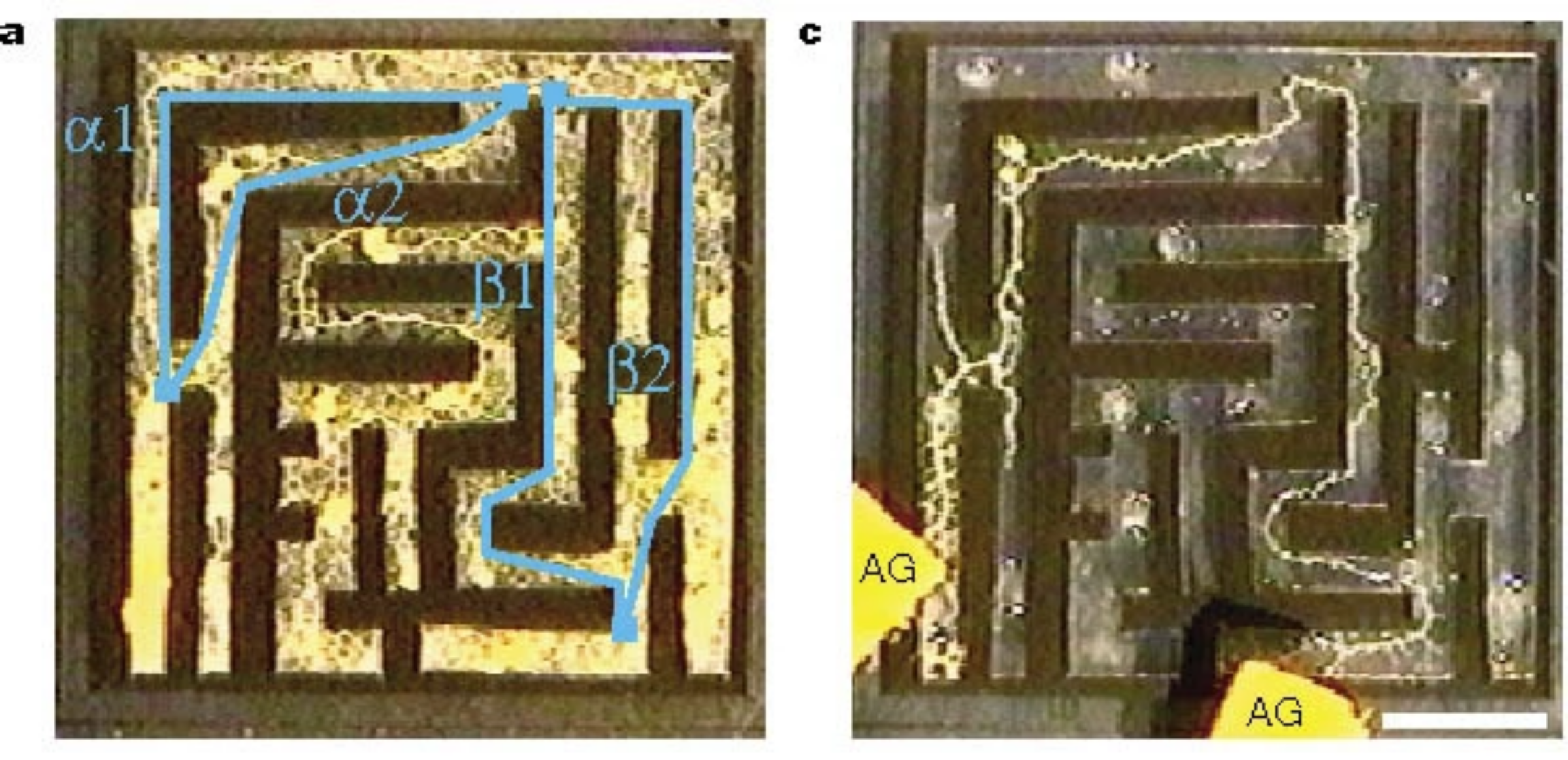
  • Maze solving

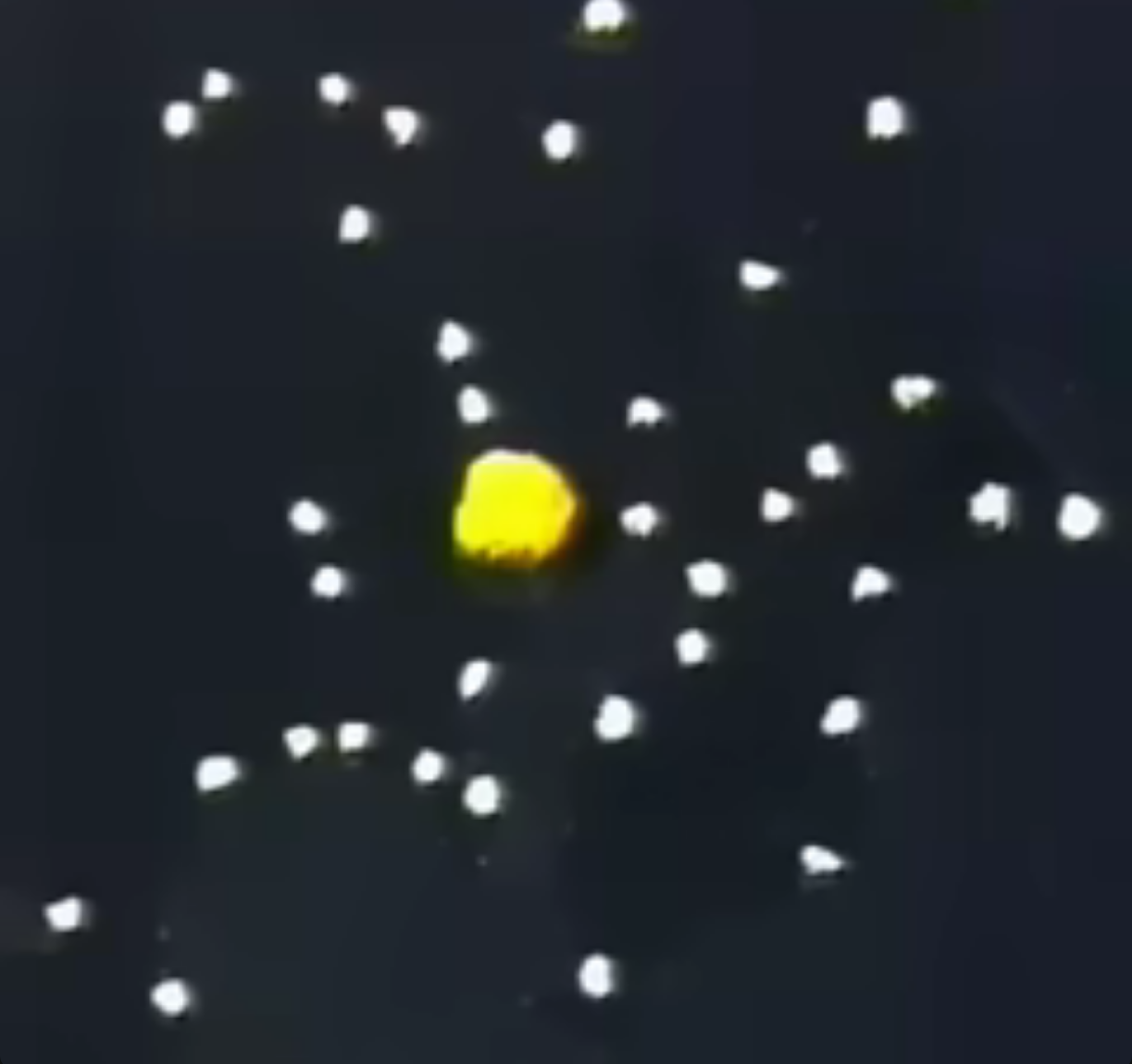
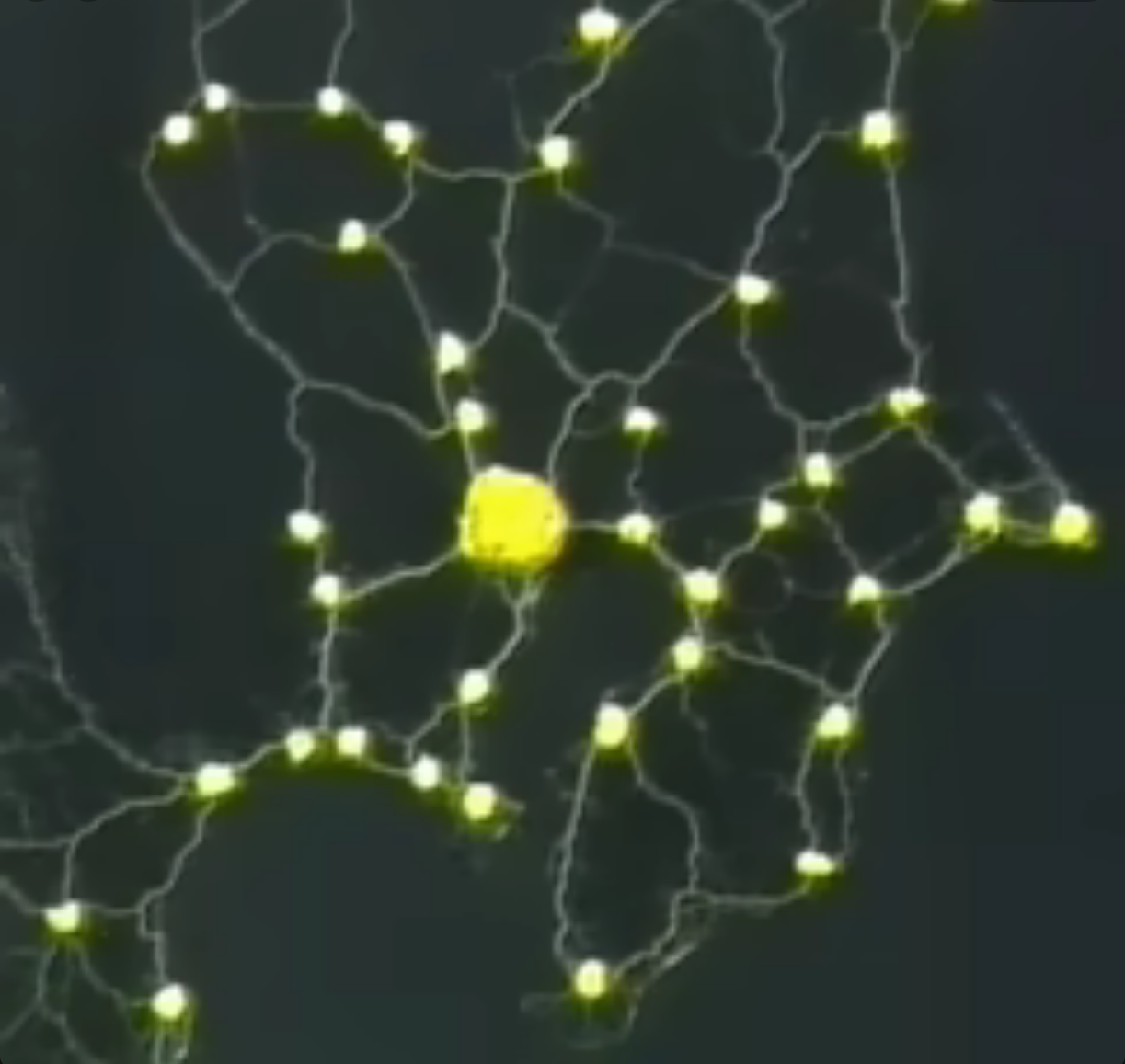
  • Tokyo subway map

Home > World of the Slime Mold > Computational Models > Results and Outcomes > Future directions

Mapping the world with/of the slime mold - 2

Slime molds as "problem solvers"

  • Traveling salesperson problem
    center
  • Towers of Hanoi puzzle
    center
    center

Bajpai et al. (2026) “Tracking and distinguishing slime mold solutions to traveling salesperson problems through synchronized amplification in the non-equilibrium steady state,” http://arxiv.org/abs/2504.03492
Reid and Beekman (2013) “Solving the Towers of Hanoi – how an amoeboid organism efficiently constructs transport networks,” https://doi.org/10.1242/jeb.081158
Home > World of the Slime Mold > Computational Models > Results and Outcomes > Future directions

Mapping the world with/of the slime mold - 3

Slime molds as ???

  • Urban designers?
  • Romans??

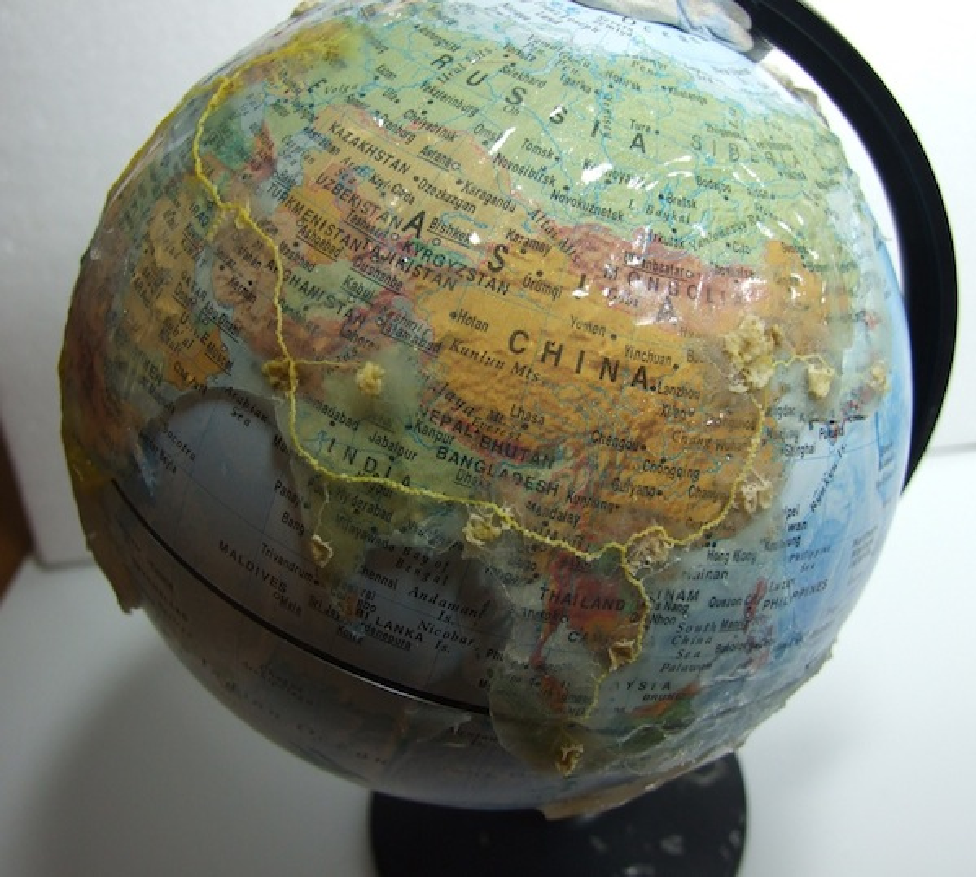
  • Colonizers???

Home > World of the Slime Mold > Computational Models > Results and Outcomes > Future directions

To err is human slime mold

Speed-accuracy trade-off

when having to choose between food sources, adding stressors reduce accuracy of choosing the larger one

dark: easy
gray: difficult

Independence of Irrelevant Alternatives

when an overall worse option is introduced into a choice among two, slime molds sometimes choose it

dark: two-choice setup
gray: three-choice setup

Home > World of the Slime Mold > Computational Models > Results and Outcomes > Future directions

Computational Models

Analytically derived

  • the slime mold's thickness is assumed to be/approximated by a mathematical rule

center


real slime mold patterns


simulation results

Monte Carlo-based

  • lots of small particles make small decisions to generate overall behavior

center

center

Home > World of the Slime Mold > Computational Models > Results and Outcomes > Future directions

Analyticaly derived models

Tero et al (2007) adapted Kobayashi et al. (2006)'s model to graphs

  • flux from node to :

    where is the conductivity of the edge, are pressures at nodes

  • two nodes are special: one is source, one is sink

    flux conserved at regular node

    flux generated at source node

    flux consumed at sink node

  • adapt the conductivities according to

center

  • this is just a lumped circuit model!
    • is node voltages,
    • is the current,
    • is the conductance

center

Home > World of the Slime Mold > Computational Models > Results and Outcomes > Future directions

Monte Carlo-based models

simple actions of little particles can give rise to complex behavior at the population level...

Jones (2010)'s model:

center
center

can we build on this?

  • say each particle "looks" at all the nodes it can travel to and assigns a positive "score" to each of them
    • softmax decision:
      • sample the next node proportional to these scores
    • Metropolis-Hastings decision:
      • sample a candidate next node
        • if better, move there
        • if worse, move or stay probabilistically
Home > World of the Slime Mold > Computational Models > Results and Outcomes > Future directions

Shortcomings of the current models

Tero et al. (2007):

center

  • biologically undesirable model
    • the function is not as interpretable
    • food sources are modeled asymmetrically
  • no repulsion term: light or slime
  • no "exploration"

Jones (2010):

center

  • no accounting of the path-finding effects
  • no food, no light, just slime
Home > World of the Slime Mold > Computational Models > Results and Outcomes > Future directions

Results and Outcomes

  • a ratinabox-style toolbox emerges!
    • world = slimeWorld(node_locs, C_, light, slime, opts)
    • slime = circuitSlime(world, options)
    • slime = softmaxSlime(world, options)
    • slime = MHslime(world, options)
  • example:

center

center

center


Home > World of the Slime Mold > Computational Models > Results and Outcomes > Future directions

Results and Outcomes

Path-finding and detours

center

center


Home > World of the Slime Mold > Computational Models > Results and Outcomes > Future directions

Results and Outcomes

Path memory

center

center


Home > World of the Slime Mold > Computational Models > Results and Outcomes > Future directions

Results and Outcomes

Undesirable paths

center

center


Home > World of the Slime Mold > Computational Models > Results and Outcomes > Future directions

Future directions

  • Tolman's sun maze: Latent learning in slime molds?

center

center

  • Spatial memory
  • Temporal memory: accommodation to repeated stimuli
  • Foraging experiments
  • Memory sharing in slime molds in contact
  • ...

Home > World of the Slime Mold > Computational Models > Results and Outcomes > Future directions

Thank you!


![h:200 center](mazeSolving.png)

![h:200](tokyoBefore.png) ![h:200](tokyoAfter.png)

![h:140](colonization2.png)

- $s(\mathbf x, t)$ is the sol thickness - $p(\mathbf x, t)$ is sol pressure
![width:300 center](wardog.gif)